

About Karuna
Our Mission
Karuna is a community of Contemplative Psychology practitioners who aspire to remain open-hearted in the face of pain and paradox. We train in methodologies combining ancient Tibetan Buddhism with Western psychological processes. We provide learning communities that aspire to integrate the trauma of the world by turning our allegiance to basic sanity.
The History of Karuna Training
-
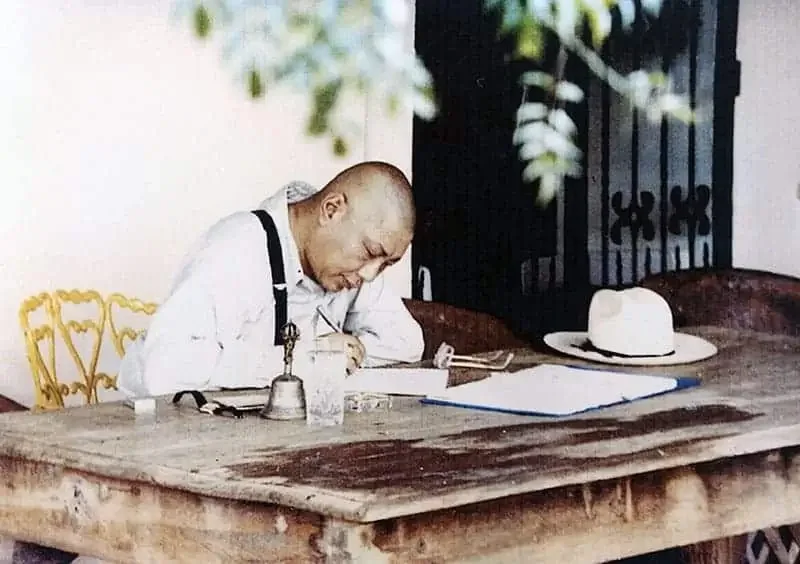
![Chögyam Trungpa in Patzquaro, Mexico at the Casa Werma Retreat Center]()
The Origins of Contemplative Psychology
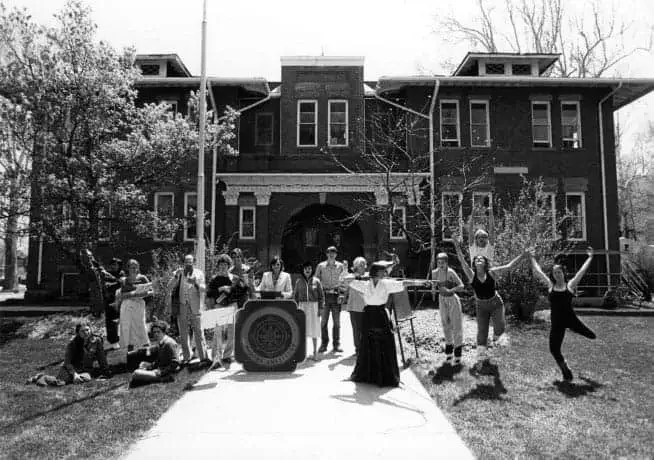
The origins of Contemplative Psychology as it is taught in Karuna Training, arose as a Masters in Contemplative Psychotherapy degree at Naropa Institute, now Naropa University, in Boulder, Colorado. The program at Naropa University has drastically changed to meet the demands of graduate education. Karuna Training is actually keeping the original contemplative psychology training to its full advantage alive.
Chögyam Trungpa, spiritual founder of Naropa Institute, saw the arts and psychology as a portal to spiritual, specifically Buddhist exploration. He arrived in America at the perfect moment to embark on numerous avenues that served to plant Tibetan Vajrayana Buddhism in the West. He established Naropa Institute in the summer of 1974 with a series of talks, which became the foundations of Naropa University today.
-
![]()
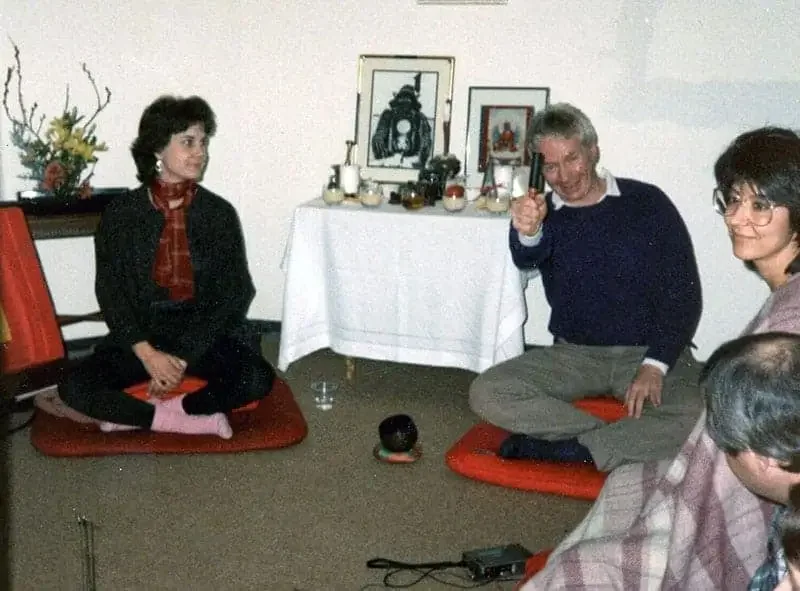
Dr. Ed Podvoll
When Dr. Ed Podvoll encountered Chögyam Trungpa, together they birthed the Contemplative Psychotherapy program which continues today at Naropa University in Boulder, Colorado. Dr. Podvoll trained in psychoanalysis with Otto Will and Harold Searles, both radical in their approach to working with severe mental challenges. They instilled a strong initiative in Podvoll to find a cure for severe and chronic mental illness.
Ed Podvoll founded the Naropa Masters in Psychotherapy Program at Naropa in 1978. During his life, Podvoll dedicated his life to contemplative methods, specifically, the founding of Windhorse Therapeutic Services, which is a revolutionary appraoch to working with severe and chronic mental illness. He published The Seduction of Madness in 1990 and entered a life-long retreat in a Tibetan Monastery in France 1994 - 2003. Podvoll passed in 2004.
-
![]()
Karuna Training is Born
Karuna Training was born in 1996 when four German Therapists approached Melissa Moore to bring them a deeper training in Contemplative Psychology as was being offered at Naropa University in Boulder Colorado. Melissa enlisted two former colleagues from the US, Paul Cashman and Irini Rockwell to join her in forming a new curriculum of contemplative psychology uncoupled from the training of therapists. There was much interest in Europe due to the possibility of practicing Maitri Space Awareness.
Karuna Training became very popular in Europe and proceeded to open cohorts in the Netherlands, France, Spain, Austria, Poland, and the UK. Karuna Training has innovated an extensive curriculum around Maitri Space Awareness in its 30 years of operation.
-
![]()
Karuna Training North America
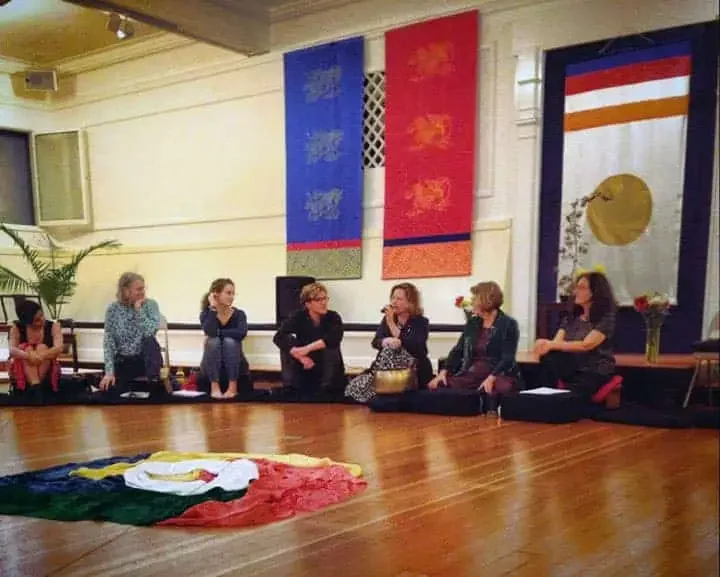
In 2004, Melissa Moore returned to North America and continued to commute back and forth to Europe to nurse Karuna Training forward. In 2014, Sandra Ladley and Kathryn Rile worked arduously to bring Karuna Training to North America.
Since 2014, Karuna North America has offered 3 year cohorts in Berkeley, CA, Seattle, WA, Albuquerque, NM, Baltimore, MD, Denver, CO, and Los Angeles, CA. Currently, Karuna training main curriculum is offered online allowing for participations from all over the world; given that there are 3 in-person retreats in the Basic Karuna Training. Karuna is in partnership with Ari Bhöd, a Tibetan Meditation Retreat Center in Tehachipi, Ca, and all of the in-person retreats are mostly happening there.
Karuna Europe has offered basic and graduate training cycles in DE, NL, FR, AU, SP, PO, and the UK.
-
![]()
Karuna Training Continues To Innovate
We currently host a community network on Circle and an active Alumni Community. We host other programs beyond the cohort and are bringing along new faculty with new ideas.
Karuna Training, unlike Naropa University, does not train therapists, but instead offers certification in Contemplative Psychology. Many trained providers integrate Karuna methodologies to their existing practices. And, one does not need to be a provider for Karuna training to be deeply transformative.
Karuna is an interpersonal transformative opportunity. At the end of the training, one is more skillful in working with themselves and others. Karuna Training is committed to diversity, equity, and Intersectionality. We offer some scholarships specifically to BIPOC and LGBTQI and any other margenalized populations. Application for sliding fees are available to all programs.
-
![]()
New Ground
Melissa Moore Ph.D. Co-founder of Karuna Training and steward of the North American Karuna training. Melissa has her MA in Contemplative psychotherapy from Naropa University in Boulder Colorado and her Ph.D. in Psychological Anthropology from the California Institute of Integral Studies.
She has been a student of Vajrayana Buddhism and Chogyam Trungpa Rinpoche since 1979. As Director of the Felton Institute for Research and Training in San Francisco (2005 - 2016) Melissa participated in community-based research for the most marginalized populations in California and trained front-line providers in mental health in Evidence-based practices, and the Mindfulness of Self-care.







Frequently Asked Questions
-
No, Karuna Training is for anyone interested in bringing a contemplative approach to everyday life. At its heart is the Five Buddha Family Mandala and the Maitri Space Awareness practice, which invites us to soften and open ourselves to greater awareness. Together these form the foundation of a rich community experience and a gentle yet powerful path toward deeper self-awareness, more skillful communication, and greater ease with difficult emotions and conversations.
-
Karuna Training offers the Basic Program which provides 250+ hours of training spread over two years.
At the end of the Basic training, graduates receive a certificate in Contemplative Psychology, which will enhance any type of therapeutic practitioners toolkit. Specifically students come away with expertise in a method called compassionate exchange, which is core to the process of mutual recovery. Mutual recovery means that as holders of the process, we also benefit deeply from the work. One could say that working contemplatively revives and rejuvenates providers in a way that thwarts 'therapeutic burn out'.
-
The certification occurs in the form of a diploma, indicating that the graduate of Karuna basic training has undergone extensive study and can demonstrate Contemplative Psychology expertise.
Like any other specialty in psychology, whether that be Gestalt, Somatic therapy, or Trauma-informed therapy, these are examples of psychological methods emphasizing working skillfully with others. Karuna Basic Training does not authorize anyone to be a therapist; however, you will gain excellent communication and therapeutic skills.
Whether one is a therapist, coach, doula, consultant, or friend, Contemplative Psychology skills are applicable and powerfully transformative. Contemplative psychology supports a means to stay present through Mindfulness-Awareness training and transverse a path of mutual recovery; while working with others. Mutual healing is how we get resourced through the act of offering ourselves to others.
-
Karuna Training Graduate cycle offers 215 hours of training spread over one year. After the graduate training, participants graduate with a certificate in the Advanced Study of Contemplative Psychology. Here participants are trained to present and hold contemplative Karuna Training methods in their work with others. Participants complete a 75-hour practicum of applied contemplative psychology offered outside in the community.
-
With a Karuna Graduate Training certificate, you are equipped to hold others using Karuna's practices. The Graduate Training is an applied training, meaning you leave with hands-on experience in facilitation, an understanding of how to create the conditions for authentic conversation and genuine human connection, and the ability to surface the collective wisdom of a group in powerful ways. Graduates are grounded in practices such as mindfulness-awareness meditation instruction, the Body Speech and Mind technique, Speaking from the Heart groups, and more, and bring this work into their own unique field of interest, whether in therapeutic, educational, organizational, or community settings.
-
Karuna Training meets the qualifications for specified hours of continuing education credit for LMFT’s, LCSWs, LPCCs, and or other LEP’s as required by the California Board of Behavioral Science.
Karuna Training is a licensed provider #137058 approved by The California Association of Marriage and Family Therapists (CAMFT) to sponsor continuing education for both the basic and graduate Karuna Trainings. These CEU’s have been extended to include online training during the Pandemic.
Karuna Training maintains the responsibility for this program and its content. Only those individuals who complete the entire course will be awarded the CEU’s. For licensed attendees outside of California who are interested in continuing education credit, please check with your State Board, to see if California CEUs are accepted.
-
We prioritize applying an intersectional lens to all of our work and believe that a diverse group is integral to everything we do. We strongly encourage and seek applications from people of color, bilingual and bicultural individuals and members of the lesbian, gay, bisexual, and transgender communities.
We welcome Karuna people of different spiritual traditions, opinions, class, nationality, culture, ethnicity, race, language, age, gender, gender identity, sexual orientation, and varied physical, perceptual and mental abilities.
-
If you cannot attend any Karuna Training weekends or retreats, you will still be charged fully for your committed program.
If you decide to withdraw from the training program entirely, we require two months of written notice. As a small non-profit organization, Kaurna relies on tuition fees to operate.
Consequently, if you withdraw, you will be responsible for paying 50% of the remaining tuition fees from your notice until the program's completion. Additionally, you will be charged for all tuition fees incurred until your withdrawal date, regardless of attendance.
-
Upaya for Contemplative studies recognizes its responsibility to listen to our participants, applicants, and other stakeholder suggestions, complaints, or grievances, and attempt to resolve any such concerns. A grievance/complaint is defined as an expression of verbal or written dissatisfaction that can include but is not limited to, services, manner of treatment, outcomes, or experiences.
Karuna Training course participants, applicants, and other stakeholders have the right to file a grievance. Individuals filing grievances are treated with dignity, understanding, and respect. In no case will a grievance result in any reprisal. Participants will not be denied service because of a grievance.
Grievances will be given prompt and careful attention and, when indicated, grievances will result in corrective action. Karuna Training staff are charged with the responsibility of providing assistance and services within the full intent of Karuna Inclusivity policies, and with making efforts to resolve conflicts.
A copy of the grievance policy will be given to any and all participants at their request or at such time that a complaint is made to a Karuna Training staff member that cannot be resolved. The following is the procedure by which participants in training and representatives of Karuna Training shall attempt to discuss and resolve grievances:
Individuals are to discuss grievances that they may have to do with the staff with whom they are in contact. If a grievance cannot be resolved by the staff member, the staff member shall inform the individual of the grievance procedure and inform the administrative assistant and the executive director of the unresolved grievance.
If the complainant(s) wishes to pursue the grievance procedure, they must inform the faculty member or the lead teacher they feel most comfortable with - of their grievance in writing along with a description of the complaint. Such intent will be communicated by the appropriate faculty member to the executive director.
Within ten working days, the complainant, faculty member, and executive director will discuss the grievance and attempt resolution.
In the event the grievance is not satisfactorily resolved at this point, the complainant may elect to submit the grievance directly to the executive director of Upaya. The executive director of Upaya reviews the case and responds within ten working days.
All written grievances, Upaya for Contemplative Studies response to them, and a summary of the action taken on each complaint will be kept and results reported through the Upaya’s Performance & Quality Improvement system, as is laid out by the California Marriage and Family Therapy credentialing body.